
Challenges in the Oral Administration of Gastro-Resistant Formulations
Introduction: Understanding the Challenges in the Oral Administration of Gastro-Resistant Formulations
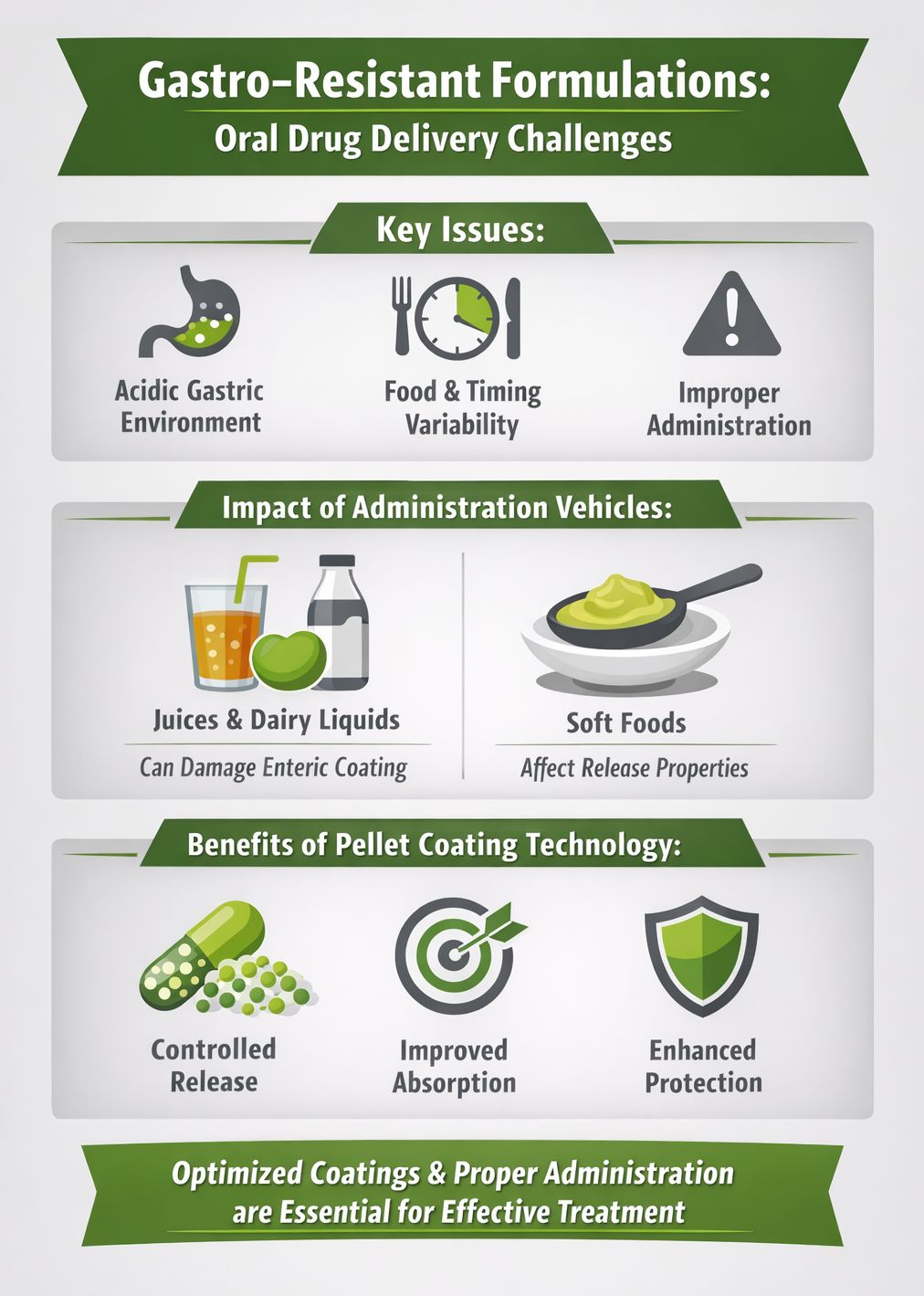
Challenges in the Oral Administration of Gastro-Resistant Formulations [1] have become increasingly important as pharmaceutical scientists seek to improve the efficacy, safety, and patient acceptability of oral drug products. Gastro-resistant formulations are specifically designed to protect acid-sensitive active pharmaceutical ingredients (APIs) from degradation in the stomach and to ensure targeted drug release in the intestinal environment. However, achieving reliable gastro-resistance remains complex because the performance of these formulations can be influenced by physiological variability, gastric residence time, food intake, swallowing difficulties, and inappropriate administration practices. Recent research has highlighted that even seemingly minor factors, such as the choice of liquid used for administration or prolonged contact with certain beverages before ingestion, may compromise the integrity of enteric coatings and lead to premature drug release. Gastro-resistant multiparticulate systems, particularly coated pellets, have therefore emerged as advanced oral delivery platforms capable of improving formulation robustness while maintaining consistent therapeutic performance.
The Role of Vehicles in Pharmaceutical Formulations
Vehicles play a critical role in pharmaceutical formulations by serving as the medium through which a drug product is administered to the patient. In oral gastro-resistant systems, vehicles such as water, juices, mineral waters, suspending agents, or soft foods can directly affect the stability and performance of the dosage form. The interaction between the vehicle and the enteric coating may alter the coating structure, influence drug release kinetics, or reduce the protective function of the gastro-resistant barrier before the formulation reaches the intestine. These effects are particularly relevant for patients with dysphagia, pediatric populations, and elderly individuals who often require modified administration techniques. Consequently, careful selection of suitable administration vehicles is essential to preserve formulation integrity and ensure consistent therapeutic outcomes.
Importance of Pellet Coating in Extended-Release Formulations
Pellet coating technology has become a cornerstone of modern extended-release and gastro-resistant drug delivery systems. Pellet-based multiparticulate formulations consist of numerous small spherical units that can be filled into capsules or compressed into tablets, offering significant advantages over conventional single-unit dosage forms. Functional polymer coatings provide protection against the acidic gastric environment while simultaneously enabling delayed, controlled, or site-specific drug release. The use of coated pellets promotes a more uniform distribution throughout the gastrointestinal tract, reduces the risk of dose dumping, minimizes local irritation, and improves reproducibility of drug absorption. In addition, multiparticulate systems offer greater formulation flexibility, allowing the combination of different release profiles within a single dosage form. These characteristics contribute to enhanced bioavailability, improved therapeutic effectiveness, reduced dosing frequency, and greater patient adherence to treatment. The thickness, composition, and mechanical integrity of the pellet coating are critical quality attributes that directly influence release behavior and long-term product performance.
Conclusion and Outlook
The Challenges in the Oral Administration of Gastro-Resistant Formulations extend beyond the development of effective enteric coatings and include factors related to patient behavior, administration conditions, physiological variability, and formulation design. Advances in pellet coating technologies and multiparticulate delivery systems have significantly improved the reliability of gastro-resistant and extended-release products, providing enhanced protection for sensitive drugs and more predictable therapeutic outcomes. Future research is expected to focus on the development of more robust coating materials, patient-centric dosage forms, and administration guidelines that minimize the impact of external variables on formulation performance. As personalized medicine and targeted drug delivery continue to evolve, gastro-resistant pellet-based systems are likely to play an increasingly important role in optimizing oral therapies and improving patient quality of life.
References
[1] A.K. Demeter et al., Pharmaceutics 2026, 18(4), 453; doi:10.3390/pharmaceutics18040453
Expert’s opinion
Challenges in the Oral Administration of Gastro-Resistant Formulations stem mainly from physiological variability and vehicle–formulation interactions that can compromise enteric protection. In my view, coated pellet systems, e.g. CELLETS®, offer the most robust solution due to their multiparticulate nature, improved dose distribution, and flexible release control. However, clinical performance still depends on optimized coating integrity and clear administration guidance.

